Featured Recipe
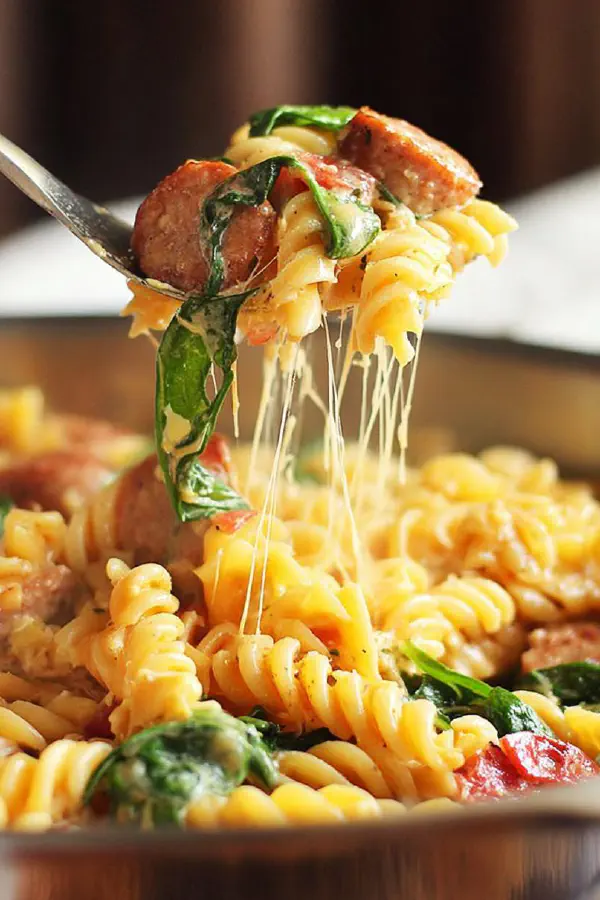
Creamy Sausage Spinach Pasta
By Kate
"
One-pan skillet pasta blending savory sausage, tender pasta, and fresh spinach in a creamy sauce thickened with potato starch and coconut milk. Simmered with diced fire-roasted tomatoes and garlic for layered depth. Cooked until onions soften and pasta reaches bite but slight resistance, then finished with melted sharp cheddar. A weeknight go-to with adaptable ingredients and tactile cues to nail timing and texture without guesswork.
"
Prep:
12 min
Cook:
22 min
Total:
34 min
Serves:
4 servings
pasta
sausage
spinach
weeknight meals
Introduction
Midweek dinner? Tiresome? Slow pan cleanup? One skillet. Hearty sausage chunks release savory oils soaking pasta in real flavor instead of water-logged plainness. Red onions soften, garlic perfumes. Fire-roasted tomatoes crackle with brightness, balancing richness. Coconut milk and potato starch swap in for cream and cornstarch, cutting heaviness but boosting velvety texture. Spinach wilts down like green velvet pillows. Sharp cheddar melts last, sealing sea of molten threads. Texture layers modulate each bite. The method: let pasta cook right in sauce, no draining, no extra pots. Get comfortable watching transformations through tight lids, hearing bubble whispers, smelling aromas emerge, touching veggies for tenderness. Techniques here feel earned, not guesswork.
Ingredients
About the ingredients
Sausage swaps easily: kielbasa, smoked chorizo, or even thick bratwurst work. Diced fire-roasted tomatoes add complexity but plain diced is fine, just brighten with splash of vinegar for tang. Chicken stock is backbone, don’t skip—water dulls flavor. Coconut milk adds richness without dairy heaviness; substitute heavy cream if preferred but lower heat to prevent breaking. Potato starch holds better under simmer than cornstarch, avoid tapioca to keep sauce clingy thin without pasty gloss. Sharp cheddar preferred for melt and bite; mozzarella or gouda can adjust style. Onion choice flexible; red or yellow give sweetness and body. Spinach fresh is best; frozen defrosted leaves risk watery sauce. Olive oil vs butter gives cleaner finish and higher smoke point, blend if you want richness.
Method
Technique Tips
Start by warming fat medium heat—not too hot or sausages scorch before releasing flavors. Watch onions shift from opaque to glassy soft; pressing gently with spatula should feel tender, not mushy. Garlic added last on sauté stage to avoid bitterness. When adding liquids and pasta, stir well to prevent clumping. Cover tightly, lowering heat—bubbles should gently rise not aggressively boil; intense boil breaks down pasta too fast, ruins texture. Stir gently 2-3 times during cooking, scrape bottom for any sticking spots to prevent scorching. When pasta tests just tender with resilient bite, bring in starch-infused coconut milk, stirring to thicken sauce uniformly. Add greens last—they wilt quickly and retain color if not overcooked. Cheese melted with residual heat avoids grainy textures. Serve straight away; pasta thickens as it cools, thin sauce slightly with splash stock if held longer. Timing leans on sensory cues throughout.
Chef's Notes
- 💡 Keep olive oil moderate heat. Not too hot or sausage browns fast. Look for just gentle sizzle. Onions, when soft, get translucent; avoid mush.
- 💡 Garlic aroma comes fast, around 45 seconds tops. Stir quickly. Watch closely, burnt garlic ruins flavor. Goes in after onions; last step.
- 💡 Budget coconut milk rich but not heavy. Thick cream can sub but lower heat, prevent breaking. Texture matters; watch sauce cling.
- 💡 Use potato starch well. Mix smoothly into coconut milk. When added, it thickens in 2-3 minutes. Less chance of clumping versus cornstarch.
- 💡 Taste seasoning near end. Salt early means pasta dries out; late means better control. Fresh cracked pepper enhances flavor layers.
Kitchen Wisdom
What's the best sausage to use?
Kielbasa works, but chorizo or bratwurst brings different flavors. Swap any thick sausage you prefer.
Can I use different pasta?
Yes, any shape can work. Cooking time may adjust. Just check textures as you go; modify liquid too.
What if pasta sticks?
Stir more frequently. Gentle scraping of pan bottom helps. Or add splash of stock if sauce thickens too much.
How should I store leftovers?
Store in airtight container; lasts few days. Reheat slowly, splash stock to loosen if thickens up.