Featured Recipe
Double Crust Cheesecake Rewrite
By Kate
"
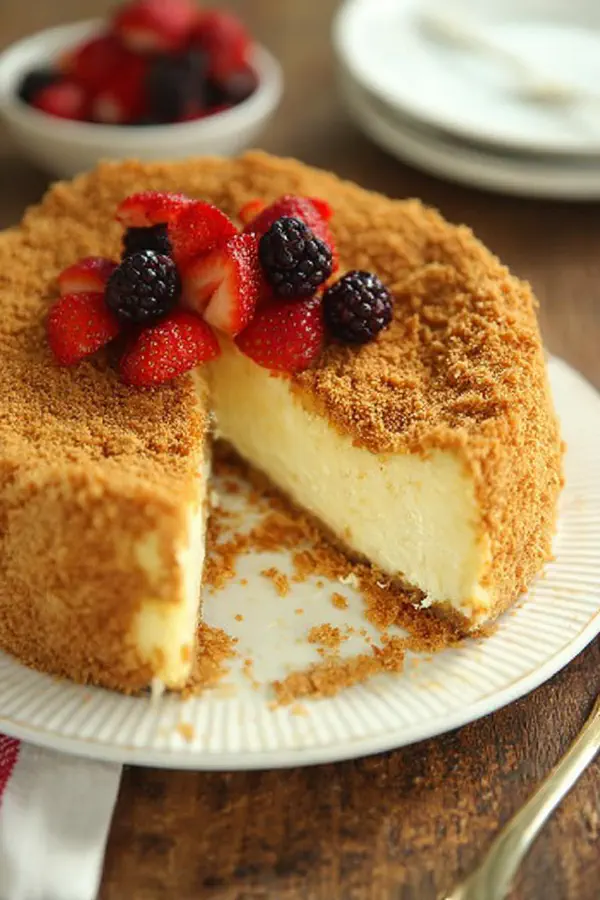
Cheesecake with graham cracker crust pressed on bottom and sides, packed tight. Cream cheese filling whipped to avoid overmixing. Topped with remaining crust crumbs, baked till edge firms, center jiggles slightly. Chilled hours before cutting. Substitutions for crust and flavor twist included. Baking cues explained through touch and visuals. Times adjusted slightly to suit oven variability.
"
Prep:
25 min
Cook:
Total:
Serves:
12 servings
cheesecake
dessert
baked goods
American cuisine
Introduction
Cold, dense cheesecake with crumbly crust pressed deep on sides — texture is everything. Skip the quick fixes; go slow on mixing. Cream cheese needs to be soft but never sloppy. Too cold and filling lumps; too warm and it breaks the texture. Watch that crust packing — loose crumbs will fall apart. Topping crumbs carry subtle crunch on soft filling inside. Cracks? Usually from overbeating or oven too hot. Jiggle test beats timers. Center jiggle feels different than liquid — look, press gently, learn that, not just staring at the clock. Chilling firms it up before slicing, so resist from cutting warm. Subtle swap idea here — digestive biscuits instead of graham crackers add nuttier tone. Brown sugar for crust adds moisture, slight caramel note. Vanilla bean paste ups flavor more than extract. Egg incorporation technique matters; fold, don’t beat.
Ingredients
About the ingredients
Graham crackers or digestive biscuits work interchangeably; digestives offer nuttier flavor, graham crackers are sweeter and more traditional. Brown sugar in crumb mix maintains moisture, preventing dry crust; white sugar can be used with slightly less quantity. Butter must be melted but cooled to avoid cooking crumbs early or melting cream cheese in filling. For cream cheese, full-fat is best for body, but 1/3 less fat will reduce richness but risk texture. Vanilla bean paste adds flecks and more aromatic flavor over extract; extract is fine but choose pure vanilla. Eggs bind filling; large standard eggs recommended. Overbeating eggs introduces air disrupting structure, so mix delicately. For crumb topping, no extra butter, just pressed lightly—too much moisture makes it soggy during bake.
Method
Technique Tips
Preheating oven and prepping pan first saves time later. Use food processor if possible for fine crumbs; chunky pieces mean weak crust and uneven texture. Press crumb crust firm but no need to compact so hard it cracks pan or is rock hard; balance. Mixing cream cheese slowly avoids lumps; scraping to avoid mixed-in clumps prevents gritty mouthfeel. Adding eggs one at a time keeps batter stable, overmixing traps air and leads to cracks and dense cake. Pour into crust carefully to avoid dislodging crumb on sides. Topping crumbs evenly important—too sparse and it looks flat; too thick and top baking uneven. Baking times vary; watch the edges for pull away from pan — key sign. Center jiggle means not fully set but safe, oven’s residual heat firms during cooling. Cool cake fully at room temperature before refrigeration; overnight chill improves sliceability and flavor harmonization.
Chef's Notes
- 💡 Use a food processor for fine crust. No big chunks. Crust must hold, press firmly — but not too hard. Gritty texture? Too loose.
- 💡 Temperature control matters. Cool melted butter before mixing. Otherwise, can cook the crumbs. Cream cheese needs to be soft — avoid lumps.
- 💡 Egg incorporation technique is crucial. Add one at a time. Mix just till blended; air = cracks.
- 💡 Watch the jiggle test to know baking's right. Edges pull away from the pan. Center jiggles like soft jelly, not slosh.
- 💡 Chill before slicing. Refrigerate 5 hours minimum, overnight best for texture. Warm cake crumbles when cut.
Kitchen Wisdom
What if the cheesecake cracks?
Overmixing or too hot oven. Lower temp 10°F. Mix less after eggs, keep it simple.
How to fix a soggy crust?
Press tighter, check melted butter temp. Avoid cooking the crumbs too soon. Too moist.
What to do with a runny center?
Not baked enough. Check edges for pull. Center jiggle means bake longer next time.
How should I store cheesecake?
Fridge is fine. Wrap well. Freezing possible but texture might change. Avoid thawing fast.