Featured Recipe
Sheet Pan Holiday Cookies
By Kate
"
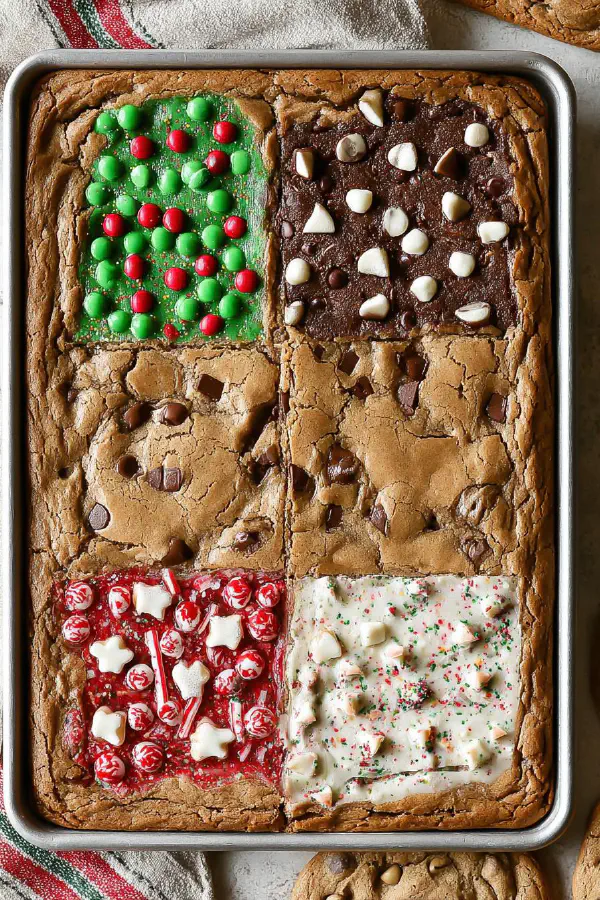
Baking chewy half sheet pan cookies, divided into four flavor quadrants. Melted butter blended with sugars. Eggs, milk, vanilla whipped in. Drys folded carefully. Divide dough into quarters, add unique mix-ins per quadrant. Press and bake until puffed but just set. Underbake slightly; residual heat finishes. Cool fully before slicing. Store airtight up to five days. Substituting Ghee for butter, oat milk for dairy milk, and swapping some sugars for honey gives variation and moisture. Flat spatulating and gentle tapping settle dough evenly. Timing cues rely on color and texture. Avoid overmixing to prevent toughness. Solid sheet pan cookie batch, easy to customize, no fuss breaking or scooping individual cookies.
"
Prep:
15 min
Cook:
18 min
Total:
33 min
Serves:
32 rectangles
cookies
baking
desserts
holiday treats
Introduction
Cookie dough divided, spiked with nuts, dried fruit, chocolate fractions. Sheet pan replaces individual scooping—cuts-time-and-cleanup advantage. Melted butter and sugars beaten till no bumps. Eggs milk vanilla follow—pantry staples transformed. The dry combo folded in, glaciers of flour but don’t overwork or gluten’s grip steals chewiness. Split into quarters, toss add-ins separately. Press down dough, connecting quadrants into a mosaic of flavors. Bake until hint of caramel on edges, center bounces back. Tap pan if puffed too much, cool fully, slice. No cookie sheet chaos here—just giant slab of seasonal treat, ready for cutting and sharing.
Ingredients
About the ingredients
Butter variation affects mouthfeel—Ghee delivers richer flavor and longer shelf life but be cautious melting; hot fat can cook eggs if added prematurely, so fully melted then cooled is better. Milk—oat or dairy—is flexible; oat thickens batter slightly, sometimes need a teaspoon less. Sugar ratio adjusted: less brown sugar reduces moisture and density but cuts sweetness marginally. Honey addition requires reducing oven temp slightly to prevent overbrowning since sugars caramelize faster. Flour sifted helps keep lightness but folding just until incorporated avoids gluten fight. Salt; no more than half a teaspoon to avoid masking sweetness but enough to balance richness.
Method
Technique Tips
Start with butter and sugars; getting sugars lump-free is crucial for texture. Eggs whipped in for structure, milk/vanilla boost tenderness and flavor depth. Dry ingredients sifted to remove clumps and evenly aerate flour and leaveners—critical for even rise. Folding technique type: scoop with spatula from edges, gently coax flour inside. Don’t stir like batter or you’ll overdevelop the gluten. Divide and conquer dough for different flavors: weighing portions ensures even size fate under heat. Press dough sections into quadrants, edges touching—helps bake evenly united. Bake shorter than usual; cookie will look puffy and soft but keep eye on edges—edges set first, center finishes as it cools. Underbaking here avoids dry crunchy interior. Immediately tap pan if dough rises high—helps cookies settle evenly before firm. Extra toppings scatter fresh on hot cookie for quick melt and appearance. Cool fully for clean cuts; warm dough tears. Use sharp serrated or scraper for squares. Airtight storage prevents hardening; microwave bursts restore chew. Common fail is overmixing dough or baking too long causing dryness. Watching surface for dull matte and springy touch cues success.
Chef's Notes
- 💡 Use a digital scale for portioning dough. Accurate weighs means even baking. Dough cool, handle less; it won’t melt. Pressing down forms even layers.
- 💡 Don’t forget to check edges during bake. Slightly colored and set edges, puffy center says time's up. Tap pan if risen too high; helps flatten.
- 💡 Mix-ins add texture. Spread out evenly; but don’t force. Let fall where they want and gently fold. Swaps for nuts or chocolate work too.
- 💡 Baking spray skips sticking issues. Not enough leads to crumbs. Pan’s greased, keeps cookies intact. Cool before cutting; warm crumbles.
- 💡 Store cookies airtight. Helps maintain chew and moistness. If they harden, just a few seconds in microwave softens centers again.
Kitchen Wisdom
Can I use different mix-ins?
Yes. Swap nuts or chocolate for what’s on hand. Dried fruits or toffee chips also fit well. Flexibility matters.
Baking time seems off?
Check for signs. Edges set, lightly golden, center puffs for about 20 minutes. Watch carefully towards end.
How do I get even cookies?
Weight portions out. Press evenly. Ensure sections touch in pan, helps bake uniformly. Tapping helps too.
What's the best way to store left cookies?
Airtight container is key for freshness. You can freeze them for longer storage. Just defrost when needed.