Featured Recipe
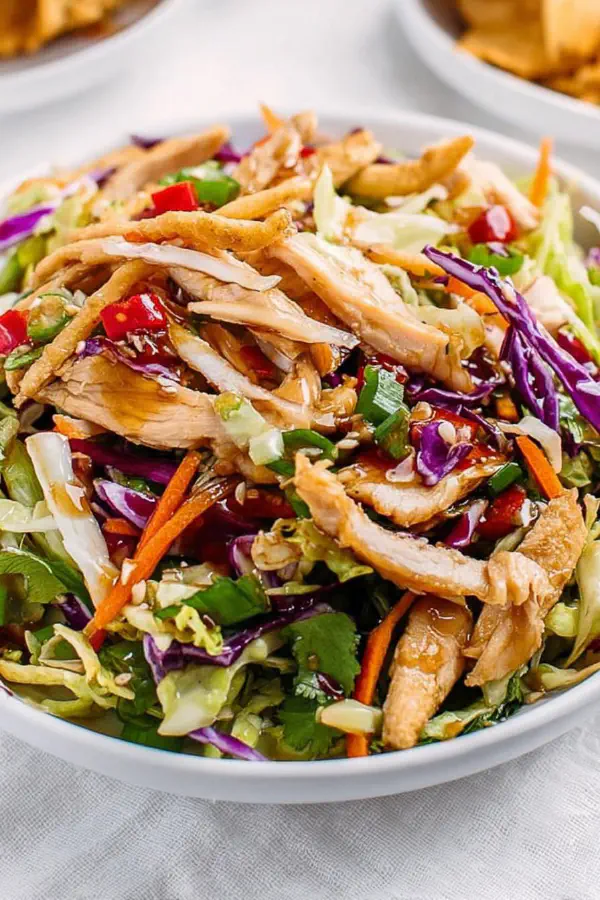
Tangy Asian Chicken Salad
By Kate
"
Crunchy cabbage and crisp bell pepper meet tender chicken in a bright salad tossed with a tangy dressing made from rice vinegar, tamari, honey, garlic, and ginger. Emulsifying the oil into the vinegar base keeps it balanced. Toss in wonton strips and crunchy noodles last to preserve texture. Sesame seeds folded into the dressing deliver nuttiness that ties everything together. Chill before serving to let flavors meld but add crunch elements right before to avoid sogginess. A quick, vibrant, and adaptable salad for weeknights or meal prep.
"
Prep:
25 min
Cook:
0 min
Total:
25 min
Serves:
6 servings
salad
Asian cuisine
chicken meals
Introduction
Crunch, snap, pop. The foundation’s fresh Napa cabbage with its pale green ruffled edges and subtle sweetness. Then flash of red from bell pepper, bright orange carrots cut fine enough to crunch under teeth but not overpower. Touch of green onions and cilantro adds that herbal punch that cuts through fat and salt—the chicken brings protein, juicy but firm. Dressing? No dumping oil in one go. Slow drizzle while whisking or you get dull globs instead of velvet coating. Chill briefly, but not too long or all collapses. Noodles and wontons tossed in last to keep that satisfying crunch. Simple, no-fuss, quick takeout vibes without waiting.
Ingredients
About the ingredients
Switch tamari for your favorite soy sauce but aim for low sodium to control saltiness. Honey is used instead of sugar for natural sweetness and slight viscosity—maple syrup works if vegan; adjust to taste. Garlic and ginger pastes speed things up but freshly grated versions add more punch; keep pastes handy for weeknight meals. Napa cabbage is softer than green cabbage and less bitter; if unavailable, substitute with shredded green or Savoy cabbage but rinse well and pat dry to avoid limp salad. For oil, sesame oil is essential here for its pronounced flavor but balancing it with neutral oils like grapeseed or light olive oil tempers intensity. Don’t skip toasted sesame seeds; their aroma when toasted in dry pan enhances final dressing.
Method
Technique Tips
Emulsifying dressing isn’t just fancy—drizzling oil slowly and vigorous whisking puts air in, leading to creamy consistency and prevents separation. Rushing this step leaves a greasy pool that won’t cling to salad. Toss veggies and chicken gently but thoroughly; you want even flavor but fragile veg can break down fast if over-handled. Chilling allows flavors to meld without wilting aleady crisp cabbage but keep an eye on timing—too long and veggies weep water. Always add crunchy elements like noodles and wonton strips at the last moment to preserve texture. The key to this salad is contrast of crispiness and juiciness, acidity tempered by oil, sweetness to cut salt, and herbs to lift. Store dressing separate if prepping ahead, toss just before serving.
Chef's Notes
- 💡 Mix rice vinegar with tamari first. Whisk till sugar dissolves. Drizzle oil slowly as you whisk to create an emulsion. Key for texture.
- 💡 Chop veggies finely. It allows more flavor absorption. Cabbage should still be crisp. If limp, rethink chilling time—shouldn’t exceed one hour.
- 💡 Keeping noodles very crunchy is crucial. Add them last. They absorb moisture quickly. Wonton strips too; gentle toss right before serving.
- 💡 Experiment with proteins—substituting the chicken for tofu or shrimp gives different flavors. Measure your marinades and keep them balanced.
- 💡 Always taste before serving. Adjust sweet or salt levels based on your ingredients. Freshness matters; garlic and ginger paste can alter flavor profiles.
Kitchen Wisdom
How to keep salad from getting soggy?
Add crunchy elements right before serving. Store dressing separate until then. Texture is key.
What can I use instead of tamari?
Regular soy sauce works. But go low sodium for better control. Adjust as needed for flavor.
How long can leftovers last?
Keep them in the fridge. Use within two days. Noodles and wontons will get mushy after that.
Can I make the dressing ahead?
Yes, that works. But store it separate. Shake vigorously before use. Always taste before adding.